

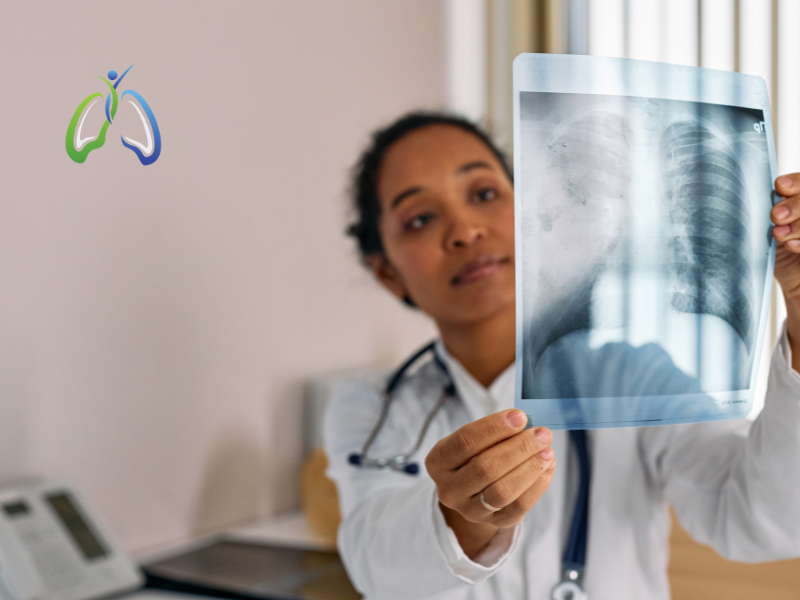
It can be alarming to be told that your lung scan is abnormal, but it’s important not to jump to conclusions. In this article we’ll look at what an abnormal scan means and what might happen next.
What is lung screening and what’s it used for?
Lung screening aims to detect lung cancer early on when treatment tends to be most effective. Screening involves testing people who may be at particular risk of lung cancer to identify early signs of the disease even before symptoms appear. If abnormalities are picked up at this stage, they can be investigated and treated, if necessary. Lung cancer screening uses a CT scan, which involves a lower dose of radiation than standard CT scans.
Research shows that regular lung screening can significantly reduce the chances of dying from lung cancer in people who are at increased risk of the disease. Screening is generally recommended for people aged 55 to 74 who previously smoked or are current smokers. Symptoms that require further investigation include a persistent cough that has lasted more than three weeks, breathlessness, coughing up blood, persistent fatigue and chest or shoulder pain. Having these symptoms doesn’t necessarily mean you have lung cancer but it’s important to get them checked out. Many people who have lung cancer screening don’t have any symptoms but choose to get screened as a precaution.
Related Reading: Who Should Consider Lung Health Screening?
Before deciding to have lung screening, it’s important to have a discussion with a healthcare professional who can explain how it’s done, what the benefits are and any potential risks.
What is an ‘abnormal’ scan?
During lung cancer screening, images of your lungs will be taken from various angles. These are combined to create a detailed 3D image of your lungs which can show up tiny areas of abnormality. Once the 3D image has been taken, a radiologist will then look at it to check for abnormalities. If anything is detected, you will be called for further tests to examine your airways or lymph nodes. This could entail more detailed scans or taking a biopsy, which is a small sample of lung tissue. The aim is to determine if the abnormality is benign or an early sign of cancer.
What are pulmonary nodules?
Pulmonary nodules are small areas of lung tissue that are denser than the surrounding tissue. They are normally round or oval, and most are 1cm or less, although they can be up to 3cm. The majority of nodules are nothing to worry about, but because a small number do turn out to be cancerous it is important that they are investigated.
What causes pulmonary nodules?
Nodules can be caused by are range of different things, including: infections such as tuberculosis, scar tissue from a previous lung injury or infection, benign (non-cancerous) hamartomas which are lumps of tissue comprising fat, cartilage and connective tissue, lymph glands, inflammation caused by conditions like Rheumatoid Arthritis, breathing in irritants such as coal dust or asbestos, or early stage lung cancer.
Nodules that are of particular concern are those that are larger or have an irregular shape. The consultant will also be concerned if you have a history of lung cancer, have smoked in the past or smoke now or if you’ve worked in certain industries where you might have been exposed to carcinogenic (cancer-causing) substances. Irrespective of your history, all nodules require further investigation.
What is an EBUS-TBNA and what’s it used for?
EBUS stands for endobronchial ultrasound. The procedure is also known as endobronchial ultrasound-guided transbronchial needle aspiration (EBUS-TBNA). It is used to assess whether an abnormal area is cancerous and can also show the size of any abnormality and if the cancer has spread beyond the lungs to the nearby lymph nodes.
An EBUS may be used to diagnose lung cancer and identify what stage it is at. It can also identify benign pulmonary nodes, mesothelioma, tuberculosis, inflammatory lung conditions, lymphomas, respiratory infections and conditions affecting the lymph nodes.
What happens during an EBUS-TBNA?
An EBUS-TBNA is normally performed in the endoscopy unit at a hospital. It takes around 40 minutes to an hour. Before the procedure you will be advised not to eat or drink for a few hours. If you take blood thinners you will need to stop taking these before the test, as advised by your medical team.
The doctor will check your blood pressure, heart and breathing rates, oxygen levels and weight. You will be asked to sign a consent form and change into a hospital gown. During the procedure you will be given a local anaesthetic mixed with a sedative to numb your nose and throat and help you relax. In some cases, you may be given a general anaesthetic instead, which means you will be asleep throughout the procedure.
Once the anaesthetic has taken effect, a narrow flexible tube called a bronchoscope will be inserted into your airways. It has an ultrasound probe on the end which emits high-frequency sound waves. These create detailed images of your lung tissue and surrounding structures, including the lymph nodes. It also enables the doctor to take tissue samples of any abnormal areas, which are then sent away for testing.
After an EBUS you can normally go home the same day, but you will need someone to drive you if you have had a sedative or anaesthetic.
Is an EBUS a safe procedure?
While an EBUS is generally a safe and effective procedure, there is a very small risk of complications. Small amounts of blood in your spit are common afterwards, but you should contact your doctor if this persists or you develop a fever or breathlessness which could indicate a chest infection. Rarely, afterwards you may develop a collapsed lung or a condition called mediastinitis which is an infection or inflammation of the chest area that is treated with antibiotics.
If you have any questions about lung cancer screening or investigations following an abnormal scan, please contact us. Dr Shalin Diwanji is a respiratory consultant who provides specialist assessment and care for a wide range of lung and breathing conditions, across London. He has performed more than 1500 EBUS-TBNA procedures.