


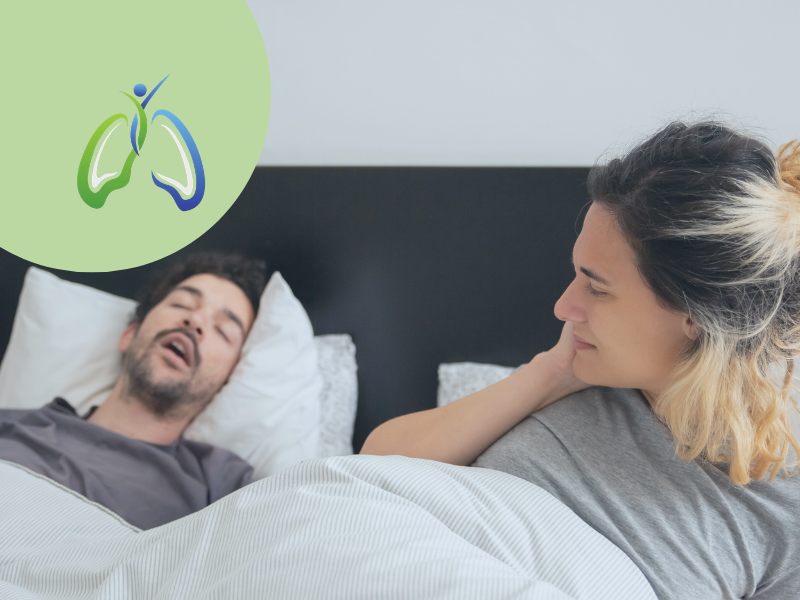
Obstructive sleep apnoea is a common condition that occurs when the walls of the throat narrow or close completely during sleep. It interrupts normal breathing and leads to broken sleep which can have serious health impacts. As well as making you prone to daytime sleepiness, which may increase your risk of accidents and have a detrimental impact on your quality of life, obstructive sleep apnoea increases the risk of developing health conditions such as high blood pressure, type 2 diabetes and atrial fibrillation (an irregular heartbeat), as well as increasing your likelihood of heart attack or stroke.
In this blog, we will look at what causes obstructive sleep apnoea, how to tell if you have it and when to see a specialist.
What is obstructive sleep apnoea?
There are two main types of interrupted breathing:
- Apnoea is a total blockage of the airway that occurs for 10 seconds or longer.
- Hypopnoea is a partial blockage of the airway that occurs for 10 seconds or longer. With hypopnoea, airflow is reduced by 50%.
If you have obstructive sleep apnoea, you may experience both apnoea and hypopnoea throughout the night. This is sometimes referred to as obstructive sleep apnoea-hypopnoea syndrome (OSAHS) or it may simply be called obstructive sleep apnoea (OSA).
When you experience apnoea or hypopnoea, the drop in oxygen triggers your brain to signal to your body to come out of deep sleep. You may wake up briefly or drop into a lighter sleep until you start to breathe normally again. Repeated interruptions to deep sleep throughout the night can make you feel very tired the next day. Unfortunately, many people have no memory of these repeated interruptions to their breathing during the night, so many are unaware that they have obstructive sleep apnoea.
What causes obstructive sleep apnoea?
Certain factors make you more likely to develop obstructive sleep apnoea. These include:
- Being overweight
- Having a very thick neck (above 16 inches for a woman and 17 inches for a man)
- A family history of the condition
- Chronic nasal congestion, thyroid disorder or other endocrine conditions
- Smoking
- Swollen or large tonsils or adenoids
- Being postmenopausal
- Deformities of the neck tissue
What are the possible symptoms of obstructive sleep apnoea?
One of the main symptoms is daytime sleepiness, waking up feeling not properly rested or having a headache in the morning. Other possible symptoms include snoring, particularly if snores are followed by periods of quiet and then resume with a loud snort. Because of the impact on quality of life, obstructive sleep apnoea is also associated with irritability, depression and memory problems.
Do I need to see a specialist for obstructive sleep apnoea?
As described above, it can be hard to know if you have obstructive sleep apnoea, particularly if you don’t have a partner to look out for possible pauses in your breathing when you are asleep. A sign that you might have the condition is experiencing unexplained and ongoing tiredness or feeling especially sleepy during the day. If you suspect you may have obstructive sleep apnoea it’s important to see your GP who will ask questions about your symptoms and may refer you to a respiratory specialist for further tests. Undiagnosed obstructive sleep apnoea leaves you exposed to developing chronic health conditions like type 2 diabetes and high blood pressure so never ignore unexplained sleepiness and ongoing fatigue.
How is obstructive sleep apnoea diagnosed?
It is important to rule out other possible causes of fatigue, such as anaemia or hypothyroidism, which is done using a blood test. Once other potential problems have been discounted, the next step is normally a sleep study to assess whether or not you have apnoea or hypopnoea. This normally entails taking some specialist monitoring equipment home with you that will monitor you while you are sleeping. It may include sensors to monitor your heart rate, a breathing sensor that is positioned close to your mouth or nose or oxygen sensors that you wear on your finger. These will help to form a picture of your breathing, heart rate, oxygen levels and snoring.
The doctor will also consider your body mass index (BMI) and measure your neck circumference. This is because carrying excess weight, and in particular having a large neck, increases your risk of obstructive sleep apnoea. In rare cases, you may need to go to a specialist sleep centre for further analysis.
If you are diagnosed with obstructive sleep apnoea, the doctor will use a measure called the apnoea-hypopnoea index (AHI) to assess the severity of your condition. Mild OSA correlates with an AHI reading of 5-15 episodes per hour; moderate OSA with 15-30 episodes per hour and severe OSA with more than 30 episodes per hour.
How is obstructive sleep apnoea treated?
The treatment you are offered will depend on the severity of your condition. For mild obstructive sleep apnoea, your doctor may recommend lifestyle changes such as losing weight, quitting smoking, cutting down on alcohol and changing your sleeping position. For moderate to severe conditions, you may need to use a continuous positive airway pressure (CPAP) device which delivers a continuous supply of compressed air through a mask while you sleep. Other treatments include a mandibular advancement device which is worn in the mouth like a gum shield to treat mild obstructive sleep apnoea. The device holds your jaw and tongue forward to increase the space at the back of your throat and reduce narrowing of the airway. If the condition is caused by a physical problem such as enlarged tonsils, you may be offered surgery.
Contact us if you are concerned that you may have obstructive sleep apnoea and we can arrange to carry out a detailed diagnosis. If a diagnosis is confirmed, we can recommend an effective treatment plan based on the severity of your condition.